
18 May, 2026
FROM SIMULATION TO PROTOTYPE: NEKLAR’S INNOVATION PROCESS FOR ADVANCED TECHNICAL SOLUTIONS
Innovation in advanced engineering is no longer a linear process. Today, industries such as automotive, energy, and mobility demand faster development cycles, higher reliability, and solutions capable of performing under increasingly complex conditions. In this context, Neklar’s Development & Innovation process combines simulation, rapid prototyping, and rigorous testing to deliver high-performance technical solutions for thermal management, acoustics, and EMI protection.
This integrated methodology allows Neklar to reduce uncertainty, accelerate development, and ensure that every solution is optimized before reaching production.
A structured innovation process: from idea to validated solution
Neklar’s innovation process is built on four key stages that work in a continuous loop of improvement:
1. Conceptualization: defining the technical challenge
Every project begins with a deep understanding of the customer’s needs and the technical constraints of the application. Whether the challenge involves thermal overload, acoustic control, or electromagnetic interference (EMI), the objective is to translate complex requirements into a clear engineering concept.
At this stage, multidisciplinary teams collaborate to define:
- Functional requirements
- Environmental and operational conditions
- Material constraints
- Performance targets
This phase ensures that the solution is not only feasible but also aligned with real-world application demands.
2. Simulation: predicting performance before physical development
Once the concept is defined, advanced simulation tools are used to model and analyze the behavior of the solution under real operating conditions.
Simulation plays a critical role in reducing development risk by allowing engineers to:
- Predict thermal behavior and heat distribution
- Analyze acoustic performance and vibration response
- Evaluate electromagnetic compatibility (EMI/EMC)
- Optimize geometry, materials, and system integration
By identifying potential issues early in the process, simulation significantly reduces the need for costly physical iterations later.
3. Rapid prototyping: turning digital models into physical reality
After validation in the virtual environment, the next step is rapid prototyping. This phase transforms simulations into tangible components that can be physically tested.
Neklar uses advanced manufacturing techniques to quickly produce prototypes that closely replicate final production parts. This allows engineers to:
- Validate real-world performance
- Test assembly and integration
- Evaluate material behavior under stress
- Refine design parameters based on physical feedback
Rapid prototyping bridges the gap between theory and reality, ensuring that designs are both functional and manufacturable.
4. Testing and validation: ensuring reliability under real conditions
The final stage is rigorous testing, where prototypes are exposed to controlled but realistic operating conditions.
Depending on the application, this may include:
- Thermal cycling and heat resistance testing
- Acoustic performance validation
- Vibration and mechanical stress tests
- EMI shielding effectiveness testing
Only after passing these validation stages is a solution approved for production. This ensures maximum reliability, safety, and performance in end-use applications.
Why this methodology creates better engineering solutions
Neklar’s integrated approach offers several key advantages compared to traditional development processes:
1. Higher reliability
By validating performance through simulation and physical testing, risks are identified and eliminated early.
2. Faster development cycles
Parallel use of digital and physical development significantly reduces time-to-market.
3. Optimized performance
Continuous iteration ensures that every design is refined to meet exact technical requirements.
4. Reduced costs and material waste
Early detection of design issues avoids expensive modifications in later production stages.
5. Multi-physics optimization
Thermal, acoustic, and EMI challenges are addressed simultaneously, resulting in more complete and efficient solutions.
Engineering solutions for complex industrial challenges
This development methodology is particularly valuable in sectors where performance and safety are critical, such as automotive electrification, industrial systems, and advanced electronics.
Neklar applies this process to develop solutions for:
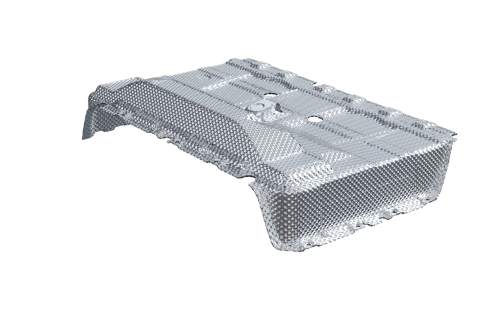
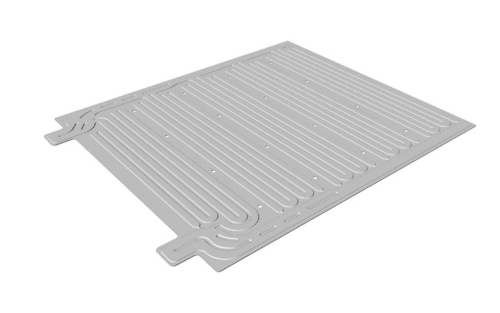
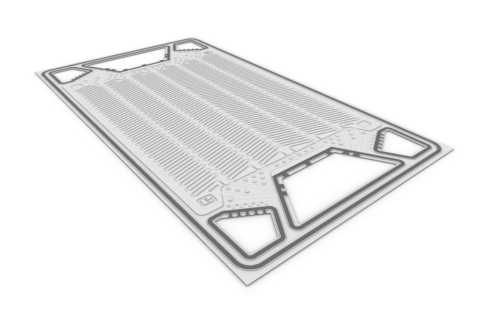
- Thermal management systems
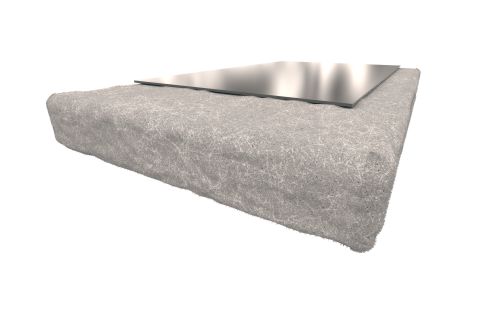
- Acoustic insulation components
- EMI shielding technologies
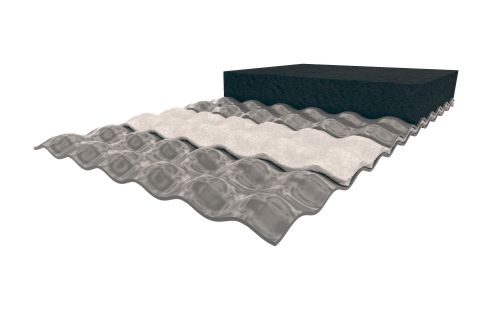
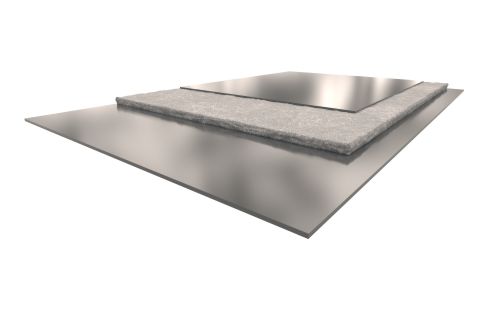
- Advanced multi-layer technical materials
These solutions are designed to meet the increasing demands of modern electric and electronic systems, where efficiency, miniaturization, and reliability are essential.
The future of innovation at Neklar
As industries continue to evolve toward electrification and digitalization, engineering challenges are becoming more complex and interconnected. Neklar’s simulation-driven and prototype-validated innovation model is designed to adapt to this reality.
By combining advanced engineering tools with hands-on testing, Neklar ensures that every solution is not only theoretically sound but also proven in real-world conditions.
This approach positions Neklar as a key development partner for companies seeking high-performance, reliable, and future-ready technical solutions.